








Definition
LTCC (Low Temperature Co fired Ceramic) technology, also known as low-temperature co fired ceramic technology, is an advanced passive integration and hybrid circuit packaging technology that can encapsulate three major passive components (including resistors, capacitors, and inductors) and various passive components (such as filters, transformers, etc.) in multi-layer wiring substrates, And integrated with active devices (such as power MOS, transistors, IC circuit modules, etc.) into a complete circuit system. It is a remarkable integrated component technology that has developed in recent years, and has become the mainstream technology of passive integration. It has become a development direction in the field of passive components and a new economic growth point for the component industry.
(1) LTCC single component, including chip inductors, chip capacitors, chip resistors, and chip magnetic beads, etc;
(2) LTCC composite devices, including composite devices represented by LC composite chip filters that contain multiple or multiple components within a single chip;
(3) LTCC integrated module, which not only contains multiple and multiple passive components in an LTCC chip, but also includes multi-layer wiring, interfaces with active modules, and so on;
(4) LTCC module integrated with bare chips. On the basis of (3), it also contains semiconductor bare chips, forming an overall packaged module.
Advantage
Compared to traditional device and module processing techniques, using LTCC technology has the following main advantages:
1. Using metal materials with high conductivity as conductor materials is conducive to improving the quality factor of the circuit system;
2. Can produce lines with a width less than 50 μ M's thin wire structure circuit;
3. It can make circuit substrates with high layers and embed various passive components, which is beneficial for improving the assembly density of circuits and devices;
4. There are multiple types of components that can be integrated, with a wide range of parameters. In addition to L/R/C, sensitive components, EMI suppression components, circuit protection components, etc. can also be integrated together;
5. It is possible to bond ICs and various active devices in various ways on 3D circuit substrates with high layers to achieve passive/active integration;
6. Good consistency, high reliability, resistance to high temperature, high humidity, shock and vibration, suitable for harsh environments;
7. Non continuous production process allows for inspection of green substrate, which helps to improve yield and reduce production costs;
8. It has good compatibility with thin film multi-layer wiring technology;
Therefore, LTCC technology, with its excellent electrical, mechanical, thermal, and process characteristics, has become the most promising way to achieve miniaturization, integration, and modularization of electronic components.
LTCC devices can be roughly divided into LTCC components, LTCC functional devices, LTCC packaging substrates, and LTCC module substrates based on the number of components they contain and their role in the circuit.
LTCC functional devices:
The filters and diplexers in early communication products were mostly bulky dielectric filters and diplexers. At present, the filters on GSM and CDMA mobile phones have been replaced by acoustic surface filters or embedded in the module base plate, while the filters on PHS mobile phones and cordless telephone are mostly LC filters made of LTCC with small size and low price, while Bluetooth and wireless network cards have chosen LC filters from the beginning.
The filters made by LTCC include three types: bandpass, high pass, and low pass filters, with frequencies ranging from tens of MHz to 5.8GHz. LC filters have unparalleled advantages in terms of volume, price, and temperature stability, and it is not difficult to understand that they continue to receive widespread attention.
The above-mentioned RF devices made by LTCC have a history of several years in foreign countries and Taiwan Province of China. Murata, Tokuo, TDK, and Shuangxin Motors from Japan, Huaxin Technology and ACX from Taiwan Province of China, and Samsung from South Korea are all in mass production and sales. Mainland China only saw from exhibitions and websites in 2003 that China Southern Glass Electronics Corporation and another company were working on developing similar products.
LTCC chip antenna:
WLAN and Bluetooth devices have short communication distances, low transmit and receive power, and low requirements for antenna power and transmit characteristics. However, there are strict requirements for the area and cost of the PCB occupied by the antenna. The chip antenna prepared by LTCC has significant advantages such as small size, easy surface mounting, high reliability, and low cost, and has been widely used in WLAN and Bluetooth.
LTCC module substrate:
The modularization of electronic components has become an indisputable fact in the industry, with LTCC being the preferred method. The available module substrates include LTCC, HTCC (high-temperature co fired ceramic), traditional PCBs such as FR4 and PTFE (high-performance polytetrafluorohexene), etc. The sintering temperature of HTCC is above 1500 ℃, and the matching refractory metals such as tungsten, molybdenum/manganese have poor conductivity, and the sintering shrinkage is not as easy to control as LTCC. The dielectric loss of LTCC is one order of magnitude lower than that of RF4. PTFE has low losses but poor insulation. LTCC can better control accuracy than most organic substrate materials. There is no organic material that can be comprehensively compared with the high-frequency performance, size, and cost of LTCC substrates.
Develop
The research on LTCC module substrates abroad and in Taiwan Province of China is in full swing, and there have been various commercial production and applications of LTCC modules. There are more than ten companies that only produce phone antenna switch modules (ASM), including Murata, Mitsubishi Electric, Kyocera, TDK, Epcos, Hitachi, Avx, and others. In addition, Bluetooth modules from companies such as NEC, Murata, and Ericsson, as well as power amplifier modules from companies such as Hitachi, are all made using LTCC technology.
LTCC module is widely used in military and aerospace equipment due to its compact structure, strong resistance to mechanical shock and thermal shock. In the future, its application in automotive electronics will be very extensive.
The development of domestic LTCC products is at least 5 years behind that of developed countries abroad. This is mainly due to the lagging development of electronic terminal products. LTCC functional components and modules are mainly used in communication products such as CSM, CDMA and PHS mobile phones, cordless telephone, WLAN and Bluetooth. Except for the 40 megabyte cordless telephone, these types of products have only been developed in the past four years in China. Shenzhen Nanbo Electronics Co., Ltd. has introduced the most advanced equipment in the world and built the first LTCC production line in China. It has developed various LTCC products and has been put into production, such as the chip LC filter series, chip Bluetooth antenna, chip directional coupler, chip balanced unbalanced converter, low-pass filter array, etc. Its performance has reached the level of similar foreign products and has entered the market. Currently, China Southern Glass Electronics is developing multiple functional modules for LTCC multi-layer substrates and wireless transmission.
Currently, LTCC specialized process equipment cannot be produced in China. According to incomplete statistics, China Southern Glass Electronics has introduced a complete LTCC production line, and about 4 research institutes have already introduced or are currently introducing LTCC pilot equipment to develop LTCC functional modules.
Hong Kong Qingshi Integrated Microsystems Company (CiMS) has long been engaged in research on microwave electromagnetic fields and the design of LTCC products. They used advanced electromagnetic field simulation and optimization software to design multiple LC filters and LTCC modules, achieving good results.
At present, the Materials Department of Tsinghua University and the Shanghai Institute of Silicate Research are developing ceramic powders for LTCC in the laboratory, but they have not yet reached the level of mass production. There is an urgent need in China to develop a series of LTCC ceramic powders with independent intellectual property rights, and to specialize in the production of LTCC ceramic belt series, laying the foundation for the development of the LTCC industry. China Southern Glass Electronics Co., Ltd. is developing three types of green belts with thicknesses of 10-100, using imported powders for 9.1, 18.0, and 37.4 μ m. The serialization of belt thickness has laid the foundation for the development of LTCC products with different designs and operating frequencies.
Application
1. Application in the development of mobile phones:
We know that in the future, mobile phones are moving towards lightweight, multifunctional, digital, high reliability, and high performance, and the demand for miniaturization, integration, and even modularization of components is becoming increasingly urgent. LTCC low-temperature co fired ceramic technology is a remarkable interdisciplinary integrated component technology that has emerged in recent years. It has played a huge role in driving changes in the volume and functionality of mobile phones, and is a powerful means to achieve future development goals for mobile phones. Someone once made a vivid analogy, comparing components made of low-temperature co fired ceramics to a building, each floor having different functions, but they are also a whole. The usage of LTCC in mobile phones is about 80% or more, and the LTCC products used in mobile phones include LC filters, duplexers, functional modules, and transceiver switch functional modules. Usually, people are most exposed to mobile phones, telephones and cordless telephone. Nowadays, the antenna inside the Bluetooth headset is most used. As long as the size is small, wireless receiving devices must use filters and antennas, which cannot be separated from LTCC. The volume of LTCC devices is very small, with the smallest being only 1mm × 0.5mm, placed in your hand, it can be said that just a slight sneeze may disappear.
2. Antenna production based on LTCC technology:
Antennas are a fundamental component of any wireless system. With the continuous development of wireless communication, the integration of communication equipment is becoming increasingly high, resulting in smaller and smaller sizes. This puts forward higher requirements for the miniaturization of antennas, and the use of LTCC technology can further reduce the size of antennas to meet the requirements of system miniaturization. LTCC is very suitable as a material for miniaturized antennas due to its high temperature resistance, high thermal conductivity, low dielectric loss, and excellent high-frequency and high Q characteristics. The multi-layer technology possessed by LTCC technology makes the layout of antennas move from two-dimensional to three-dimensional, creating better process conditions for antenna miniaturization.
3. The role of LTCC in microwave devices:
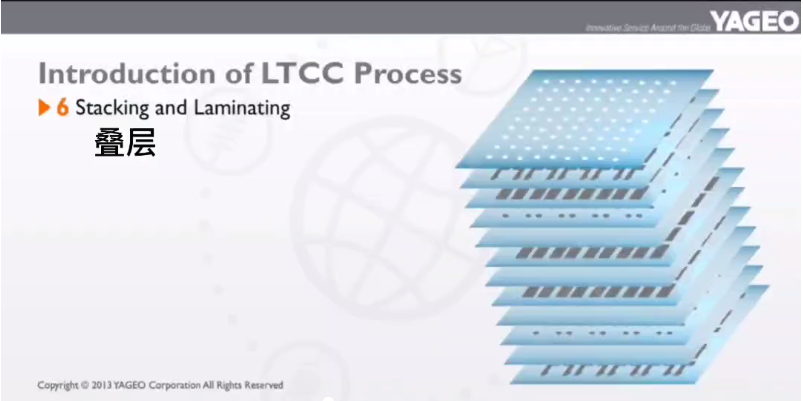
Among numerous microwave dielectric plates, LTCC has more advantages over HTCC. It combines the advantages of co firing technology and thick film technology, reducing expensive and repetitive sintering processes. All circuits are laminated and hot pressed and sintered in one go, saving time, reducing costs, and reducing circuit size; For the field of RF and microwave, more importantly, it has advantages such as high quality factor, high stability, and high integration. Therefore, LTCC has become an ideal material for civilian and military electronic systems. At present, microwave devices based on LTCC technology have begun to be used in various mobile communication devices such as mobile phones, PHS, cordless telephone, and also in modules such as Bluetooth, wireless LAN cards, antenna switches, etc. Low temperature ceramic co firing (LTCC) technology uses thick film materials to co sinter metal electrode materials and ceramic materials in one go based on pre designed layout patterns and stacking sequences to obtain the required passive devices and module components. The stacking technology of metal strips can conveniently achieve the coupling of capacitance and inductance between layers. By using the method of cross capacitance coupling, transmission zeros that can improve transmission characteristics can be obtained in the stopband. In addition, LTCC uses high conductivity metals such as gold and silver as conductive media, which will not oxidize during the sintering process, so there is no need for electroplating protection; The composition of LTCC ceramic substrates is variable, and dielectric materials with different electrical properties can be generated according to different ingredients. Each parameter can be adjusted within a certain range, thereby increasing design flexibility.
<strike id="66e88"></strike>